The current housing crisis is not a new phenomenon. Canada has faced multiple housing crises over the years, often linked to large-scale population shifts.
Notable examples include the Great Irish Famine (1845-1852), the Great Depression of 1929, and World War II, followed by a rural exodus and the baby boom (1946-1964).
These population movements led to the most severe housing crisis in Canadian cities in the early 1950s. At that time, the majority of middle-class citizens were renters, and homeownership, as today, was a significant challenge.
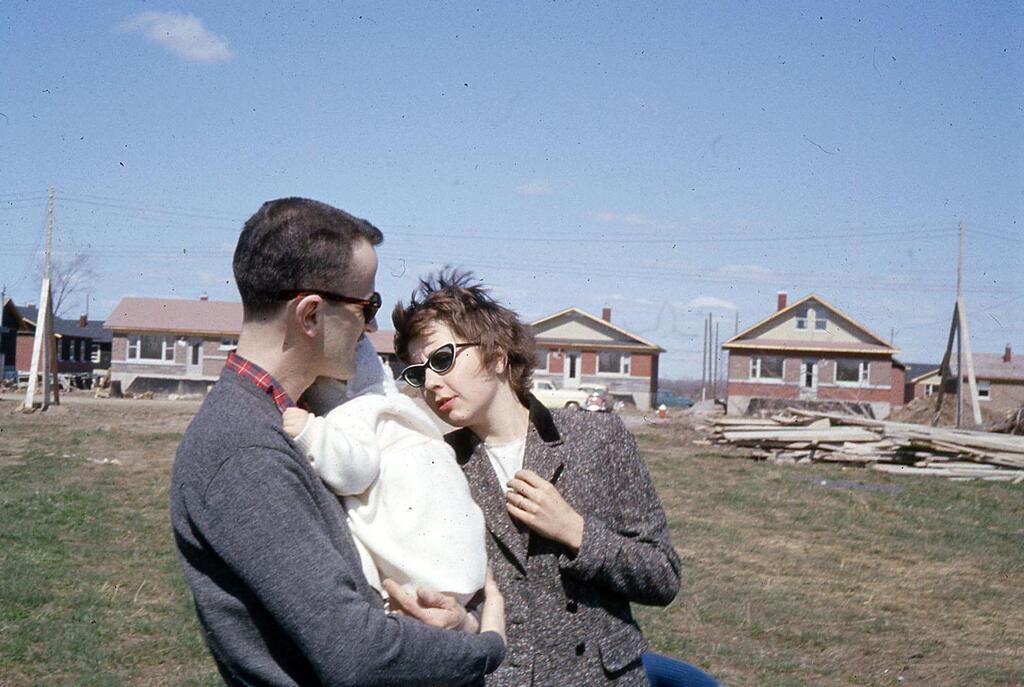
The current housing crisis bears many similarities to the crisis of the 1950s: significant population movement, a slowdown in residential construction, unaffordable housing for the middle class, and a difficult economic context.
However, other factors are now intensifying the crisis, such as housing regulations across three uncoordinated levels of government, administrative delays, evolving family dynamics (increased divorces and separations), and the post-pandemic effects (material shortages, price surges).
Additionally, large-scale land purchases by corporations, the rise of short-term rentals (Airbnb), developers' preference for luxury housing, and labor shortages worsen the situation. It's clear that reducing immigration would only worsen the labor shortage.

Given the multi-faceted nature of the crisis, solutions must be varied. One way to ease the crisis is to facilitate homeownership for the middle class. Each time a family buys a home, a rental unit is freed up. As in the 1950s, housing prices are too high due to developers prioritizing luxury residences to maximize profit. Banks similarly benefit from financing larger projects. This vicious cycle needs to be broken, which will require government intervention. In November 2024, the median family income in Ontario is 79,500$ after taxes, or about 6,625$ per month. For a 900,000$ home north of Toronto, with a down payment of 150,000$ and an interest rate of 5.00% over 30 years, the monthly payments (including property taxes and insurance) amount to 4,026$. This represents more than 50% of a family’s net income.
In 1955, inspire by the Nova Scotia Antigonish Movement, the Montreal Cooperative purchased lands in St-Léonard-de-Port-Maurice, where it built 655 houses between 1956 and 1962, sold at prices ranging from 8,500$ to 12,000$, approximately 40% below the market price at the time. Financed by Desjardins and with support from all three levels of government, the cooperative enabled working-class families to access homeownership. To be eligible, one needed to have held a stable job for at least two years, with an income equivalent to a factory wage. The homes were sold at cost, and cooperatives built more than 10,000 houses between the 1950s and 1960s in the greater Montreal.
Today, the cooperative concept should be modernized, but the ultimate goal remains the same. To alleviate the housing crisis, some countries have favored high-rise apartment buildings, but these structures with limited green space hold little appeal for younger generations and don’t address the current crisis. Canada, with its vast lands, has enough space to support single-family homes, condos, duplexes, or triplexes, each with landscaped surroundings and gardens.
One of the keys to success lies in the type of housing. It is crucial to move away from luxury housing by building single-family homes, semi-detached houses, or duplexes between 1,000 and 1,800 square feet on lots of 5,000 to 6,000 square feet. These homes should include two to four bedrooms, a living room, a kitchen, a dining room, two bathrooms, and a semi-finished basement ready for legal rental if needed, all well-insulated and space-efficient. They could include solar panels, grass seeds instead of sod, trees, and a rain-absorbing driveway. The homes will be sold at cost, with an additional 0.5% to cover administrative expenses and support future developments.
Although the cooperative primarily targets first-time buyers, it is not exclusively limited to them. Members must have stable employment for two years, not own a home at the time of application, and meet financial institution requirements. If the owner needs to relocate or buy a larger home due to family expansion, they could resell to the cooperative and be prioritized for another property. These new communities should be inclusive and multi-generational to support a homeownership cycle that adapts to family needs. The homes will be sold at cost, with an additional 0.5% fee to cover administrative expenses and support future development initiatives.
The success of this project depends on the collaboration between federal, provincial, and municipal governments. Potential actions include:
Coordinating between government levels and organizations (financial institutions, developers, housing cooperatives).
Streamlining acquisition processes.
Controlling large-scale land purchases by corporations.
Regulating immigration temporarily until the housing crisis is under control.
Developing infrastructure in line with housing projects.
Have been a permanent resident of the province for at least two years.
Have a mortgage calculated over 25 years that does not exceed 25% of the combined net income of both partners.
Additional eligibility criteria may be established by the provincial board of directors.
The provincial board of directors is responsible for developing the vision, construction methods, policies, administrative guidelines, and admission criteria, as well as maintaining contact with federal and provincial government agencies and overseeing development projects. This board would be composed of volunteer members with expertise in real estate development and environmental fields.
Local boards of directors for development projects would have the mission of working with municipalities to initiate and manage local development projects. These boards would be made up of future homeowners and citizens who want to actively engage in addressing the housing crisis.
This development concept is distinctly conservative, offering communities the opportunity to take charge and launch their own development projects, while reducing costs and exceeding environmental standards.
In addition to providing access to homeownership and helping build financial wealth for a population that has lost hope of owning property, such a project would open up numerous opportunities for small and medium-sized businesses, as well as startups, to contribute to and help build the project, which is the foundation of our economy.
In a democracy and a capitalist system, it is not the government's responsibility to build housing for us, but rather to provide us with the necessary tools and protect us throughout the construction process by establishing clear laws and regulations, while preventing the monopoly of large real estate developers.
This project is only one of many possible solutions to address the housing crisis, but it has proven effective in the past. If we don’t invest in future generations in a sustainable way, how can we expect them to invest in the generations to come?
We believe in the power of community and shared knowledge.
We empower individuals with the tools to achieve their homeownership dreams.
We operate transparently and uphold the highest standards of trust.